









There’s something profoundly beautiful about the journey of coffee—from a delicate seed planted in volcanic soil thousands of miles away to the aromatic cup that graces your morning table. As someone who has spent years exploring both the literary world and the intricate universe of coffee, I’ve come to appreciate that every sip tells a story of geography, culture, tradition, and human ingenuity.

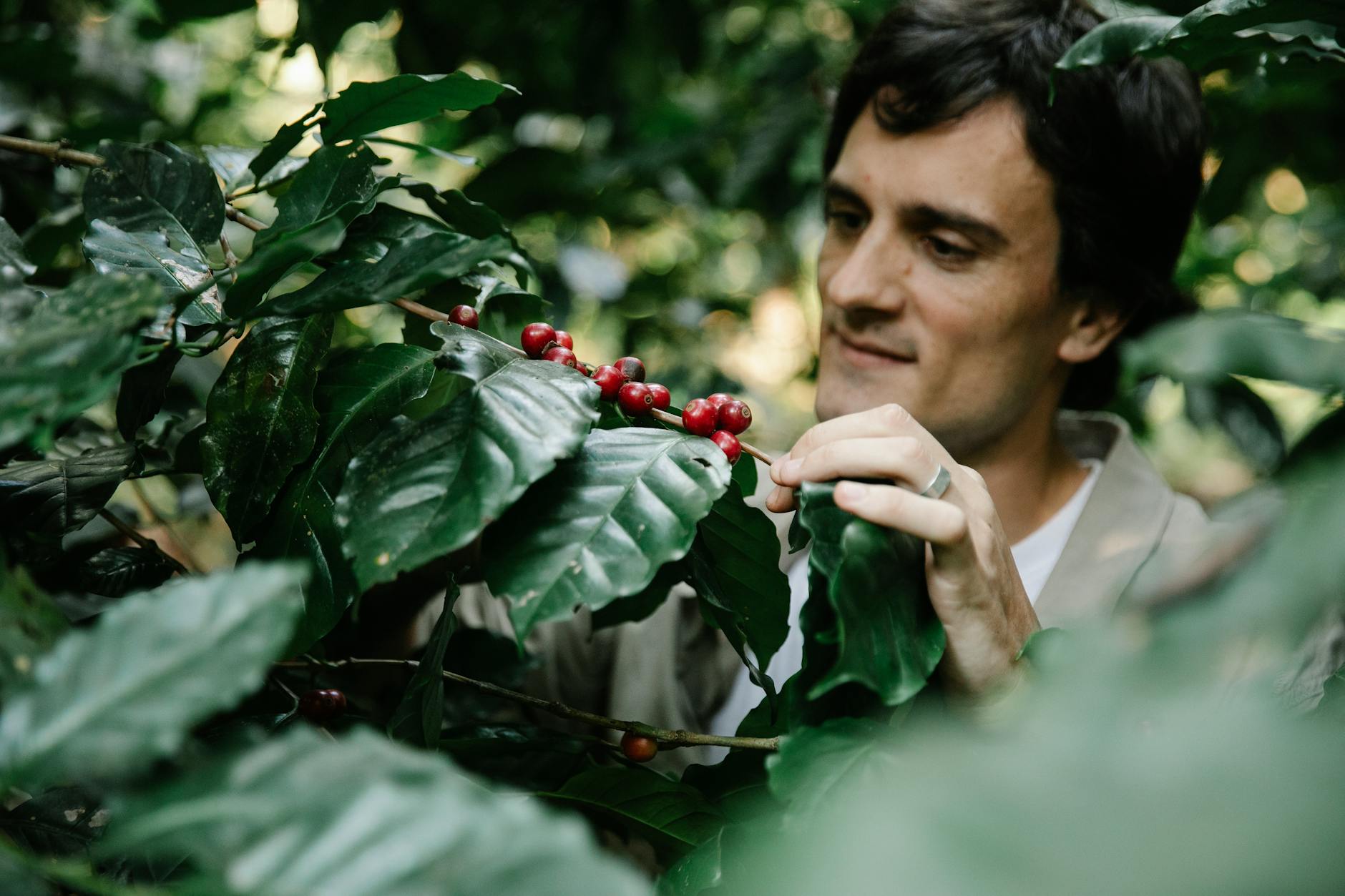
This is more than just a beverage. Coffee is a global narrative written by farmers, roasters, baristas, and enthusiasts like you and me. Let’s embark on this journey together, tracing the path from seed to cup while exploring how this remarkable bean has shaped cultures and continues to evolve in our modern world.
The Origins: A Brief History of Coffee
From Ethiopian Highlands to Global Phenomenon
Legend tells us that coffee was discovered in the Ethiopian highlands around the 9th century, when a goat herder named Kaldi noticed his goats dancing energetically after eating berries from a certain tree. Whether myth or reality, Ethiopia remains the birthplace of Coffea arabica, the species that accounts for roughly 60-70% of global coffee production.
From Ethiopia, coffee traveled to Yemen, where Sufi monks cultivated it to stay awake during long nights of prayer. By the 15th century, coffee had reached Persia, Egypt, and Turkey. The first coffeehouses—called “qahveh khaneh”—opened in the Middle East, becoming centers of social activity and intellectual exchange.
European traders brought coffee to the continent in the 17th century, and it quickly became a sensation. Coffeehouses proliferated in major cities like London, Paris, and Vienna, serving as hubs for business, art, and political discourse. The famous Lloyd’s of London insurance market actually began in a coffeehouse.
The Colonial Spread and Modern Production
European colonial powers recognized coffee’s commercial potential and established plantations throughout their tropical colonies. The Dutch brought coffee to Java (hence the nickname), the French to the Caribbean, and the Portuguese to Brazil. This colonial legacy shaped the modern coffee belt—the region between the Tropics of Cancer and Capricorn where coffee thrives today.
Today, over 70 countries produce coffee, with Brazil, Vietnam, Colombia, Indonesia, and Ethiopia leading global production. The industry supports approximately 125 million people worldwide, making it one of the most important agricultural commodities on the planet.
From Seed to Harvest: Life on the Coffee Farm
Planting and Cultivation
The coffee journey begins with a seed—actually the green, unroasted coffee bean itself. Farmers plant these seeds in shaded nurseries, where they germinate over several weeks. After 6-12 months, the seedlings are strong enough to transplant to the field.
Coffee plants are remarkably particular about their growing conditions:
- Altitude: Arabica thrives at 2,000-6,000 feet; Robusta prefers lower elevations
- Temperature: Ideal range of 60-70°F for Arabica, slightly warmer for Robusta
- Rainfall: 60-80 inches annually, with distinct wet and dry seasons
- Soil: Rich, volcanic soil with good drainage
- Shade: Many varieties benefit from canopy trees that protect delicate plants
It takes 3-4 years for a coffee tree to produce its first harvest. A mature tree can produce coffee for 20-30 years, though productivity peaks between years 7 and 20.
The Art of Harvesting
Coffee cherries don’t ripen uniformly, which presents a significant challenge. There are two primary harvesting methods:
Strip Picking: All cherries are stripped from the branch at once, regardless of ripeness. This method is faster and more economical but results in mixed quality.
Selective Picking: Only ripe cherries are hand-picked, requiring multiple passes through the same trees. This labor-intensive method produces superior quality and is standard for specialty coffee.
In regions like Colombia and Kenya, steep mountain terrain makes mechanized harvesting impossible, requiring all coffee to be hand-picked. A skilled picker can harvest 100-200 pounds of coffee cherries per day, which yields only 20-40 pounds of green coffee beans.
Processing: Transforming Cherry to Bean
Once harvested, coffee cherries must be processed quickly to prevent fermentation. The processing method profoundly impacts the final flavor profile.
Wet Processing (Washed Coffee)
This method produces clean, bright coffees with pronounced acidity:
- Pulping: Machines remove the outer skin and fruit
- Fermentation: Beans sit in water tanks for 12-48 hours to break down remaining mucilage
- Washing: Beans are thoroughly rinsed
- Drying: Beans are spread on patios or raised beds until moisture reaches 10-12%
Washed coffees showcase the bean’s intrinsic characteristics and terroir, making this method popular for high-quality Arabica.
Dry Processing (Natural Coffee)
The oldest and simplest method, producing fruity, complex coffees:
- Drying: Whole cherries are spread in the sun for 3-4 weeks
- Turning: Regular turning prevents mold and ensures even drying
- Hulling: Dried fruit is mechanically removed from the bean
Natural processing requires less water—a crucial advantage in drought-prone regions—and creates wines, berry-like flavors that many coffee lovers adore.
Honey Processing
A hybrid method popular in Central America:
The skin is removed, but some or all of the sticky mucilage (called “honey” for its texture) remains during drying. The amount of mucilage left determines the designation: white, yellow, red, or black honey. This method produces coffees with balanced sweetness and body.
The Roasting Transformation
Green coffee beans are shelf-stable and relatively flavorless. Roasting unlocks the complex chemistry that creates coffee’s beloved aromas and flavors.
The Roasting Process
During roasting, beans undergo dramatic physical and chemical changes:
- Drying Phase (0-5 minutes): Moisture evaporates, beans turn yellow
- Browning Phase (5-8 minutes): Maillard reaction creates hundreds of flavor compounds
- First Crack (8-10 minutes): Beans expand and crack audibly, like popcorn
- Development Phase (10-12+ minutes): Roaster develops desired flavor profile
- Second Crack (12+ minutes): Cellular structure breaks down further (darker roasts)
Roast Levels and Flavor
- Light Roasts: Preserve origin characteristics, bright acidity, floral and fruity notes
- Medium Roasts: Balanced acidity and body, caramel sweetness, broader appeal
- Medium-Dark Roasts: Lower acidity, fuller body, chocolate and nut flavors
- Dark Roasts: Minimal origin character, bold and bitter, smoky notes
Specialty roasters carefully profile each coffee, adjusting time and temperature to highlight specific characteristics. A light roast of Ethiopian Yirgacheffe might showcase jasmine and blueberry notes, while a medium roast of Colombian Supremo emphasizes caramel and citrus.
The Importance of Freshness
Coffee begins losing flavor immediately after roasting. Peak flavor occurs 3-14 days post-roast, after degassing but before staling. For optimal taste, purchase whole beans roasted within the past 2-4 weeks and grind just before brewing.
Brewing: The Final Transformation
The brewing method you choose dramatically affects your coffee’s flavor, body, and overall experience.
Understanding Extraction
Brewing is essentially controlled extraction—dissolving soluble compounds from ground coffee into water. The goal is to extract the desirable flavors (sweet, fruity, chocolatey) while avoiding over-extraction of bitter compounds.
Key variables include:
- Grind size: Finer = more surface area = faster extraction
- Water temperature: 195-205°F is ideal for most methods
- Brew time: Longer contact = more extraction
- Coffee-to-water ratio: Typically 1:15 to 1:17 (coffee:water by weight)
- Water quality: Filtered water with balanced mineral content
Manual Brewing Methods and Flavor Profiles
Pour-Over (V60, Chemex, Kalita Wave)
These methods produce clean, bright cups that highlight a coffee’s nuanced flavors. The paper filter removes oils and fine particles, creating clarity and emphasizing acidity. Pour-over is ideal for light-roasted, single-origin coffees where you want to taste the terroir.
Equipment needed: Dripper, paper filters, gooseneck kettle, scale, grinder
Grind size: Medium-fine (similar to table salt)
Brew time: 2.5-4 minutes
Best for: Ethiopian, Kenyan, and other bright, complex coffees
French Press
Full immersion brewing with a metal filter produces rich, full-bodied coffee with more oils and sediment. This method emphasizes body over clarity and works beautifully with medium to dark roasts.
Equipment needed: French press, kettle, grinder
Grind size: Coarse (like breadcrumbs)
Brew time: 4 minutes
Best for: Brazilian, Sumatran, and other full-bodied coffees
AeroPress
This versatile device can produce everything from espresso-style concentrate to clean filter coffee, depending on your recipe. The pressure-assisted extraction creates a smooth cup with low bitterness.
Equipment needed: AeroPress, filters, kettle, grinder
Grind size: Fine to medium (depending on recipe)
Brew time: 30 seconds to 2 minutes
Best for: Experimentation and travel
Moka Pot
This stovetop brewer uses steam pressure to create strong, espresso-like coffee. Popular in Italy and Latin America, it produces an intense, full-bodied brew.
Equipment needed: Moka pot, stove, grinder
Grind size: Fine (but not espresso-fine)
Brew time: 4-5 minutes
Best for: Italian roasts and milk-based drinks
Automatic Brewing Systems
Drip Coffee Makers
Modern drip brewers have evolved significantly. Look for SCA-certified machines that maintain proper temperature and provide even water distribution. Quality drip brewers offer convenience without sacrificing flavor.
Recommended models: Technivorm Moccamaster, Breville Precision Brewer, OXO 8-Cup
Best for: Households brewing multiple cups, consistent daily coffee
Espresso Machines
Espresso is the foundation of countless coffee drinks and represents the pinnacle of coffee brewing complexity. True espresso requires:
- 9 bars of pressure
- 195-205°F water temperature
- 25-30 second extraction time
- Finely ground coffee, properly tamped
Quality espresso machines range from $400 entry-level models to $10,000+ commercial machines. The learning curve is steep, but the rewards—perfectly pulled shots with rich crema—are unmatched.
Categories: Manual lever, semi-automatic, automatic, super-automatic
Best for: Espresso enthusiasts, milk drink lovers, those seeking ultimate control
Cold Brew Systems
Cold brewing extracts coffee using time rather than heat, producing smooth, low-acid concentrate that’s perfect for iced coffee.
Equipment needed: Cold brew maker or large jar, grinder
Grind size: Extra coarse
Brew time: 12-24 hours
Best for: Summer drinking, low-acid preferences, make-ahead convenience
Essential Accessories for the Complete Coffee Experience
Coffee Grinders: The Most Important Investment
A quality grinder is more important than your brewing device. Pre-ground coffee loses flavor rapidly, and inconsistent grind size leads to uneven extraction.
Burr Grinders (Recommended)
Burr grinders crush beans between two abrasive surfaces, producing uniform particle size. They come in two types:
- Flat burrs: Produce bimodal particle distribution, often preferred for espresso
- Conical burrs: Create more uniform distribution, excellent for all methods
Entry-level: Baratza Encore ($150), Timemore C2 manual ($70)
Mid-range: Baratza Virtuoso+ ($250), Fellow Ode ($300)
High-end: Niche Zero ($700), Eureka Mignon Specialita ($500)
Espresso-specific: Baratza Sette 270 ($400), Eureka Atom ($800+)
Blade Grinders (Not Recommended)
These use spinning blades to chop beans, resulting in inconsistent particle size and poor extraction. If budget is a concern, consider a manual burr grinder instead.
Kettles: Precision and Control
For pour-over methods, a gooseneck kettle provides the precise control needed for even extraction.
Stovetop Options:
- Hario Buono ($50): Classic design, excellent pour control
- Fellow Stagg ($80): Beautiful aesthetics, built-in thermometer
Electric Variable Temperature:
- Fellow Stagg EKG ($200): Precise temperature control, sleek design, hold function
- Bonavita Variable Temperature ($90): Reliable, affordable, excellent performance
- Breville Smart Kettle ($100): Multiple temperature presets, keep-warm function
Variable temperature kettles are invaluable because different coffees extract optimally at different temperatures. Light roasts often benefit from 205°F, while darker roasts may taste better at 195°F.
Scales: The Key to Consistency
Precision scales ensure repeatable results by measuring both coffee and water accurately.
Essential features:
- 0.1g precision
- Built-in timer
- Water-resistant design
- Fast response time
Recommended options:
- Acaia Pearl ($250): Professional-grade, Bluetooth connectivity, beautiful design
- Timemore Black Mirror ($100): Excellent value, fast response, rechargeable
- Hario V60 Scale ($50): Budget-friendly, reliable, compact
Water: The Forgotten Ingredient
Coffee is 98% water, yet water quality is often overlooked. Tap water with high chlorine, excessive minerals, or off-flavors will compromise your coffee.
Solutions:
- Filtered water: Brita or similar filters remove chlorine and some minerals
- Third Wave Water: Mineral packets that create ideal brewing water
- Reverse osmosis + remineralization: For ultimate control
Ideal brewing water contains 50-175 ppm total dissolved solids with balanced calcium and magnesium content.
Sustainability: The Future of Coffee
The coffee industry faces unprecedented challenges that threaten its future. Climate change, economic pressures on farmers, and environmental degradation demand urgent action from everyone in the supply chain—including consumers.
The Climate Crisis and Coffee
Coffee is exceptionally vulnerable to climate change. Rising temperatures, unpredictable rainfall, and increased pest pressure threaten production in traditional growing regions. Studies predict that by 2050, the land suitable for coffee cultivation could shrink by 48-97% in key regions.
The carbon footprint of coffee is significant. A single 12-ounce cup of black coffee generates approximately 0.258 kg CO₂e, while a latte’s emissions soar to 0.844 kg CO₂e due to dairy production. Remarkably, 75-91% of coffee’s carbon footprint is generated before beans even leave the farm, with major contributors including land use change, fertilizer use, and processing methods.
Sustainable Farming Practices
Forward-thinking farmers and organizations are implementing solutions:
Agroforestry: Growing coffee under native tree canopy provides shade, preserves biodiversity, improves soil health, and sequesters carbon. This traditional method is experiencing a renaissance as its environmental benefits become clear.
Precision Agriculture: Data-driven fertilizer application can reduce emissions by up to 10% while maintaining yields.
Water Conservation: Dry processing and improved wet-milling techniques reduce water consumption and wastewater pollution.
Renewable Energy: Solar-powered processing facilities and roasteries significantly reduce the carbon footprint of coffee production.
Biochar Application: Converting coffee tree residues into biochar improves soil health while sequestering carbon.
Certification and Standards
Multiple certification programs help consumers identify sustainably produced coffee:
- Fair Trade: Ensures minimum prices and community development premiums
- Rainforest Alliance: Focuses on environmental protection and farmer welfare
- Organic: Prohibits synthetic pesticides and fertilizers
- Bird Friendly: Requires shade-grown coffee that preserves bird habitat
- Direct Trade: Roasters work directly with farmers, often paying premium prices
The Global Coffee Platform has developed the Coffee Sustainability Reference Code, which provides a common language for sustainability across the industry. As of 2025, 30 sustainability schemes have been recognized as equivalent to this code, demonstrating growing sector alignment around sustainability principles.
The Economic Reality for Farmers
Despite coffee’s $200+ billion global market value, many farmers struggle with poverty. The “coffee price crisis” sees farmers receiving less than the cost of production when commodity prices drop.
Specialty coffee offers a solution. By focusing on quality, traceability, and direct relationships, specialty roasters can pay prices that support farmer livelihoods. When you pay $16-20 per pound for specialty coffee, you’re investing in:
- Sustainable farming practices
- Fair wages for farm workers
- Quality-focused cultivation
- Environmental stewardship
- Community development
What Consumers Can Do
Your purchasing decisions matter:
- Buy specialty coffee from transparent roasters who share origin information and farmer stories
- Choose certified coffees when buying commodity-grade coffee
- Reduce waste by using reusable cups and composting spent grounds
- Consider plant-based milk alternatives, which have significantly lower carbon footprints than dairy
- Support roasters who demonstrate commitment to sustainability and farmer welfare
- Educate yourself about coffee origins and production challenges
The Cultural Significance of Coffee
Coffee as Social Ritual
Throughout history and across cultures, coffee has served as a catalyst for human connection. The Ethiopian coffee ceremony, Italian espresso bar culture, Swedish fika, and American coffeehouse meetings all demonstrate coffee’s role in fostering community.
In Ethiopia, the coffee ceremony is a sacred ritual involving roasting green beans over charcoal, grinding by hand, and brewing in a traditional jebena pot. The ceremony can last hours and represents hospitality, respect, and friendship.
Italian espresso culture emphasizes quick, standing consumption at the bar—a brief but essential social touchpoint in the daily routine. The morning cappuccino, the post-lunch espresso, and the afternoon macchiato punctuate the Italian day.
The Third Wave Coffee Movement
We’re currently experiencing the “third wave” of coffee culture:
- First Wave: Coffee as commodity (instant coffee, diner coffee)
- Second Wave: Coffee as experience (Starbucks, flavored drinks)
- Third Wave: Coffee as artisanal product (specialty roasters, single origins, transparency)
Third wave coffee emphasizes:
- Direct trade relationships with farmers
- Light to medium roasting to preserve origin characteristics
- Precise brewing methods
- Transparency about sourcing and pricing
- Coffee as an agricultural product worthy of appreciation like wine
This movement has elevated coffee from mere caffeine delivery to a sophisticated beverage with terroir, processing nuances, and flavor complexity rivaling wine.
Coffee and Creativity
Coffeehouses have historically served as incubators for creativity and intellectual exchange. The Enlightenment flourished in European coffeehouses. Writers like Hemingway and Sartre crafted masterpieces in Parisian cafés. The Beat Generation gathered at San Francisco’s Caffe Trieste.
Today’s specialty coffee shops continue this tradition, serving as third places—neither home nor work—where people gather, create, and connect. The coffee shop has become synonymous with remote work, creative pursuits, and community building.
Bringing It All Together: Your Personal Coffee Journey
The journey from seed to cup is long, complex, and involves countless hands and decisions. When you understand this journey, each cup becomes more meaningful—a connection to farmers in distant mountains, to roasters perfecting their craft, and to a global community united by this remarkable beverage.
Finding Your Perfect Cup
Your ideal coffee experience depends on personal preferences:
If you value convenience: Invest in a quality automatic drip brewer and a good grinder. Buy freshly roasted beans from a local roaster.
If you enjoy ritual: Explore pour-over methods. The meditative process of hand-brewing can be as rewarding as the resulting cup.
If you’re adventurous: Try different origins, processing methods, and brewing techniques. Keep a coffee journal to track your discoveries.
If you love milk drinks: Consider an espresso machine and learn the art of milk steaming. The learning curve is steep but rewarding.
If you’re environmentally conscious: Prioritize certified sustainable coffees, use reusable filters and cups, and compost your grounds.
The Continuous Journey
Coffee appreciation is a lifelong journey. There’s always a new origin to explore, a different brewing method to master, or a subtle flavor note to discover. This endless exploration is part of coffee’s magic.
Start where you are. Maybe that means upgrading from pre-ground to whole beans. Perhaps it’s trying your first pour-over or visiting a local roastery. Each step deepens your appreciation and connection to this global community.
More Than Just a Beverage
Coffee is agriculture, chemistry, craft, culture, and community. It’s the farmer carefully tending trees on a mountainside, the roaster coaxing out perfect flavor development, and the barista skillfully extracting a beautiful shot. It’s also you, taking a moment in your busy day to savor something special.
As we face challenges like climate change and economic inequality in coffee-producing regions, our role as consumers becomes increasingly important. Every purchase is a vote for the kind of coffee industry we want to support—one that values quality, sustainability, and fairness.
The next time you hold a cup of coffee, take a moment to appreciate the incredible journey those beans have taken. From a seed planted months or years ago, through careful cultivation and harvesting, precise processing and roasting, to the brewing method you’ve chosen—it’s all there in your cup.
This is the magic of coffee: a simple pleasure that connects us to the world, to each other, and to the land that sustains us all.
Esther Lombardi is a writer, editor, and coffee enthusiast based in the United States. When not exploring the nuances of coffee culture, she can be found reviewing books and crafting articles about the things that bring meaning to our daily lives. Follow her coffee adventures at ACoffeeGeek.com and connect with her professional work at linkedin.com/in/editwrite.
Discover more from A Coffee Geek
Subscribe to get the latest posts sent to your email.


Recent Comments